Friday, July 10, 2009

Mushrooms, Growing Our Writing, and Parabola Magazine

Wine kept cool in dark cellars. Whiskey aging in oak barrels. Bread dough set out to rise on the counter. A chicken breast marinating in soy and ginger. The lacy white filaments of a mushroom root buried in damp compost. A poem fleshed out, then tucked away in a drawer. The germinating seed of a short story. The landscape of a novel unfurling after a dormant winter. All these things do better given time to ripen.

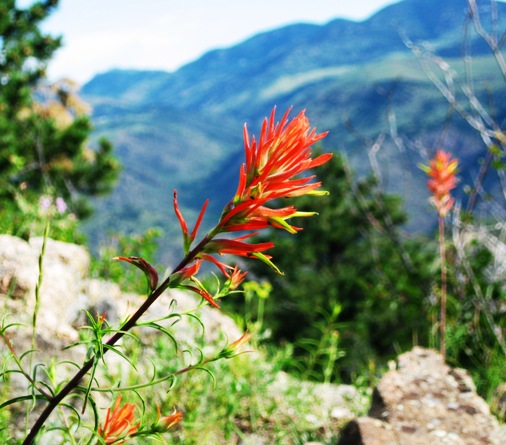
We’ve had abundant moisture this spring and early summer. The Rocky Mountains are awash in wild flowers. And wild mushrooms. They’re everywhere. Sprouting stubborn caps in gravelly soil. Pushing up through needle-covered ground beneath ponderosas. They’re in the sun. In the shade. Under logs. Next to rocks. Growing in between the bunch grasses and among the penstemons.

Several years ago, the Wyoming Center for the Book asked many of the Wyoming Arts Council literary fellowship recipients and a few other notable authors living in Wyoming to write essays for the anthology Deep West: A Literary Tour of Wyoming (Pronghorn Press, 2003). They asked us to explore how our work had been influenced or not influenced by life in Wyoming; what our views were on regionalism in literature; and what issues of Place interested us.

We were given almost a year’s advance notice. Plenty of time to let an idea percolate. Of course, writers as accomplished as Annie Proulx probably didn’t need much time. But I did. I felt deeply rooted to the landscape where I lived, but also felt deeply rooted to the Colorado landscape from which I had come. When I spent fourteen days in the depths of the Grand Canyon and felt totally at home, I ventured to ask myself: What is this thing called Place?

One of the writer’s resources that I keep on hand, and have been subscribing to for several years, is Parabola, published by the Society for Myth and Tradition. What I love about the magazine is that each issue explores a single theme from a multi-cultural perspective. Want to know more about humanity’s place in the cosmic order? Read the “The Tree of Life” interview with Nobel Peace Prize winner Wangari Maathai in the Fall, 2007 issue Holy Earth. Want to know more about knowledge? Read Mara Freeman’s Celtic essay “Eating the Salmon of Wisdom” in the Spring, 1997 issue Ways of Knowing.

Several months before the essay was due, I sat down with Parabola’s Summer 1993 issue, Place and Space, and began reading. I highlighted passages and quotes from essays. I savored epicycles and reread poems. I fell gratefully into the responses of Robert Lawlor in the interview with him “Dreaming a Beginning” in which he talks about the Aborigines of Australia. “In a sense we are all indigenous people in that we are all of the earth,” he said.

In a sense we are all indigenous people in that we are all of the earth. What a comforting thought--that each of us is indeed native to the earth. I let that thought simmer for several weeks, perhaps for a few months. Not in a preoccupied way, but in the quiet way evening shadows have of creeping over the land. What I read crept over me and the essay began to form itself, even though I hadn’t yet written a word. It was gestating in the dark chambers of my heart and mind.

I was preparing the writing. Not procrastinating, but preparing--garnering wisdom so that I would be wise enough to write.

“What is this thing called place?" I eventually asked the reader. "How can we be so deeply rooted to it, yet so easily transplanted from it? If a sacred place is where two worlds intersect, can it also be a place where two stories meet?”

In posing these questions for myself, and the reader, I came closer to understanding what I did not know--an important step in growing stories, and wisdom.

Writing, and preparing ourselves to write, allows us to unearth hidden knowledge, hidden meaning, and hidden purpose. It’s best not to rush these things. When we plant our ideas in the compost of time and allow some distance from them, they often rise fully formed, and perhaps if we’re lucky, even with a touch of brilliance as breathtaking as a mushroom pushing up from the earth.

Mushroom photos by Page Lambert, taken near Mt. Vernon in the foothills west of Denver, Colorado. If you would like a copy of Page's essay, "This Thing Called Place," please leave a comment here on the blog requesting one, along with your email. Or contact Page directly at page@pagelambert.com. To subscribe to Parabola magazine or check their submission guidelines, go to http://www.parabola.org/.

Monday, May 25, 2009

Cultivating a Literary Garden

Plant the Seeds of Intention
The dog days of summer, when Sirius, the “dog star,” rises and sets with the sun, will soon be upon us. Hot sultry weather. Balmy nights. Screen doors and porch swings. Iced lemonade and fresh peach ice cream. The long sagas of our lives lived at a lazy pace.

Sound like the summer of a by-gone era? For many of us, there is nothing slow or lazy about summer. Fall arrives and we glance back over our sun-burned shoulders wondering why we didn’t read more books, or work on that novel, or fill at least one journal with poetic prose. Our writing aspirations, along with the dog, were left to languish on that figurative summer porch.

Cultivating a literary summer garden doesn’t have to be hard work, but it won’t flourish unless you plant seeds of clear intention. Identify your goals, scatter them among your other activities, and fertilize them with attentiveness. Here’s a two-pronged tool to get you started.

Explore Your Literary Neighborhood
There are more reasons than ever to stay close to home this summer, to travel the literary back roads of your neighborhood, your state, your region. The West is abundant with authors of award-winning books. Since 1971, the Colorado Center for the Book has been recognizing with annual awards the best novels, poetry, works of nonfiction, anthologies, biographies, histories, children’s books, fine press, and pictorial publications. (A list of the Colorado Book Award winners is available from Kris Rabida at Colorado Humanities, (303) 894-7951, or rabida@coloradohumanities.org. If you live in Wyoming, check out the Wyoming Center for the Book, or think about attending the Wyoming Book Festival in Cheyenne. Or go to the National Center for the Book website, click on your affiliated state organization, and search their site for literary events in your area.

Here's another way to begin planting your literary garden. This summer, set aside a few hours each week. Pluck one book each week (preferably in the genre in which you write) from the list of award winners in your state. Take that book with you to your local café or nearby park. By the end of the summer, you will have harvested a working knowledge of your genre at the regional level, and you will have a much better idea of which books are winning these coveted awards, and why. I plan on picking up a copy of Bruce Decker's Home Pool: Stories of Fly Fishing and Lesser Passions (a 2009 Colorado Book Award fiction/literary finalist) and taking it with me on my River Writing and Sculpting Journey for Women in August.

Explore Your Physical Neighborhood
In 1985, Johnson Books of Boulder (Big Earth Publishing) published the quiet little book Seven Half Miles from Home by Wyoming author Mary Back. For twenty years, Mary, an artist, left her home each morning before breakfast and took a one-mile walk, a half-mile out, and a half-mile back. “The record of her observations became a conscious immersion in the body of life,” wrote Library Journal in their review. “She began to study seven different ecological communities including thickets, desert, swamp, forest, and river.”

Explore the terrain within a half-mile of your home. Explore what it means to be a westerner. Learn the names of the plants, trees, animals, and birds that share your neighborhood. Create a character sketch of them. Are they native to the area? Deciduous? Nocturnal? Do they mate for life? Where do they spend their winters? Sit with your journal among your favorite family of lichen-covered boulders and ponder their history and genetics. Pick a few characters from the novel you’re writing, or the memoir you’re crafting, and learn about the flora and fauna in their neighborhoods.

Start a list of your favorite regional poets. Commit to buying 3 books of poetry this summer from that list. Begin a dialogue with your favorite poems from those books. Each week, pick a poem, read it twice, then write a response to it (no rules, anything goes, just write). You might enjoy Open Range: Poetry of the Reimagined West (Ghost Road Press) edited by my friend Laurie Wagner Buyer and her husband WC Jameson, or Tamped: Loose Enough to Breath by Mark Todd, an exploration of the interaction between man and nature.

Pick up a copy of Susan Tweit’s award-winning book Colorado Scenic Byways, enjoy the gorgeous photography by Jim Steinberg, then plan a road trip. Or get a copy of Candy Moulton's Roadside History of Wyoming, take a journal with you, stop at all the greasy spoons and hidden hideaways, and pilfer as many tidbits of overheard dialogue as you can. Then, just for fun, sprinkle a few of these tidbits into the mouths of your characters and let them take over the story for awhile. You might be surprised at what you’ll glean from this playful scattering of seed, fresh from the tongues of locals.

This article first appeared in the May 2009 issue of InPrint, the official newsletter of the Colorado Authors' League.

Friday, May 1, 2009

Walking Nature Home: Are We Our Mothers' Daughters?

In some ways, choosing to write only about the few times in Walking Nature Home where Susan Tweit writes about her mother is like describing a single sea shell when the entire ocean stretches before you. So I urge you to journey on your own into the tide-deep waters of this memoir. You will find an intimate world inhabited by much more than a single shell.

Explore her author's notes. You'll appreciate the sources she references and the useful way in which she categorizes them. Astrology and Star Lore. Astronomy. Autoimmune diseases. Community of the Land and Ecology. Gardening. Health and Healing. Quakerism. Science. These are the myriad, sometimes turbulent, but always thoughtful waters inhabited by her memoir.

"To my eyes," writes Susan, "my mom is beautiful, with large blue eyes, a cap of wavy silver hair framing her tan face, and a ready, charming smile. The notes in her health log, though, reveal the pain of swollen and distorted joints, the debilitating curve in her spine, the digits frozen or twisted into unnatural angles, her stick-thin arms and legs."

Both our mothers suffer(ed) from debilitating and chronic disease. Susan's mother, married to a scientist with a doctorate in organic chemistry and still alive, has great faith in western medicine. My mother, married for twenty-five years to a visionary but complicated man who founded the financial planning profession, followed dual paths of healing while she was alive. Susan's mother wrote of the "disappointment when each drug, so promising at the start, became less and less effective; of days when her body felt like a battleground.”

I remember standing in front of the bathroom mirror with my mother after her fifth surgery, this time for breast cancer. The lymph pump was still connected to the red, swollen tissue in the caverns where her right breast and lymph glands had been. She smiled, rather wistfully, as she stared at her battered body. But as always, she was pragmatic and positive. Much to her doctors’ amazement, she rallied again and again, and continued to take mega doses of IP-6.

“Before arthritis,” Susan writes, “my mother wore three rings: her engagement diamond, a slender gold wedding band, and an antique Italian cameo passed down from her mother’s aunt. When Mom’s finger joints became so swollen that her rings had to be cut and bridged, she gave the cameo to me.

“One afternoon, I was trimming her nails… As I cradled her cold and bloodless hands gingerly in mine, I was struck by the juxtaposition of our fingers, hers swollen, crooked, and painful, mine still slender and relatively straight… I felt the stiffness in my joints and fear stabbed by gut: I saw my mother’s hands in mine. And I swore that I would not allow my body to become a battlefield.”

Take it back, this living will that condemns us both.

That line is from a poem of mine, written when my mother was still alive. I understand Susan’s fear. It is mine, too. And my sister’s. Must we inherit your diseases? we asked silently, even as we knelt to rub peppermint oil on her swollen knees.

But Susan’s book is not about fear. It is about channeling fear back into the river bed where the waters of life flow. Like the waters that flow through the industrialized banks of Ditch Creek in Salida, Colorado, which Susan and her husband Richard live. Susan has transformed her fear into fertile soil, fertile enough to grow strawberries and eggplant and sugar snap peas and summer squash, enough to feed them for months, enough to share with neighbors.

Are we are our mothers’ daughters? If we are, then we must remember to claim all of them, not just their frailties and illnesses. Susan inherited “luminous fibers” from her mother, who was born and raised near San Francisco Bay. “’For some people,” Susan quotes Barry Lopez in her book, “what they are is not finished at the skin, but continues with the reach of the senses out into the land….Such people are connected to the land as if by luminous fibers….’”

Susan’s mother had a “feel for sea cliff, wave form, and beach sand” that “was honed on the central California coast, her affinity for desert shaped by visits to her grandparents in Tucson….” My mother was raised by a deaf mother in the Mohave Desert, and as a young woman moved to Berkeley, California, where she met my father. They later moved to Colorado, where I was born, and where Susan lives.

My mother grew to love the mountains of Colorado. She chose to live the last twenty years of her life in these mountains. And now I live here too, in the same home where she died. I sleep in the same bedroom where I last held her in my arms as she grasped my hands. I look out at the same gangly Ponderosa pines and at the occasional deer walking the same backyard trail. Susan watches a muskrat burrowing along the creek and a red fox hunting amidst the Indian ricegrass.

To find yourself engaged in a beautiful book written by a kindred spirit is one of life’s greatest gifts, especially a book with as many layers as Walking Nature Home. “Susan Tweit has written a glorious love story,” writes Kathleen Dean Moore, “to her Rocky Mountain sage meadows, to her husband Richard, to her own unreliable body. I read this book long into the night, lifted by the beauty of the story….”

To read more about mother/daughter health connections, read Mother-Daughter Wisdom: Creating a Legacy of Physical and Emotional Health by Christiane Northrup, M.D., available from Random House.

Monday, April 20, 2009

Lessons from the Land: Columbine High School, Wild Turkey Hunting, and Hidden Scars

Ten years ago today our 16-year-old son Matt wandered the ponderosa forests of Wyoming’s Bear Lodge Mountains near our ranch with a twelve-gauge shotgun, a couple of apples, deer jerky, a few sandwiches, and two hunting buddies. It was opening day of wild turkey season.

400 miles south, on this same day, Eric Harris and Dylan Klebold terrorized and killed 12 students and one teacher at Columbine High School in Littleton, Colorado. Before the day was over, they too would be dead.

I spent most of my growing up years in Littleton, a town whose roots spread from the foothills west into the Rocky Mountains, and east into the shortgrass prairies. The ancestors of the Merriam turkeys that now wander the Bear Lodge Mountains of Wyoming were once native to the ponderosa forests of Colorado.

My son had been excited about opening day for months. This was his first turkey hunt. He and his two friends (one an experienced hunter and wildlife artist, the other a member of a professional outfitting family), had all received parent-approved-leave to miss school that day. All three young men had taken the required Hunter Safety Courses.

On our small ranch we received only two television stations. As I watched the news of the tragic shooting in Littleton, I also envisioned my son and his friends hiking the hills, shotguns pointing downward, turkey calls spilling forth from voices deepening with the promise of manhood. I worried for their safety, trusted in their good sense, gave thanks for the stories they would learn from the land, and grieved for the people in my hometown of Littleton.

During the winter, Matt and his friends had hiked miles and miles of hills and woods—scouting for coyotes, marveling at bull-sized elk tracks, treasuring antlers shed by fleet white-tailed deer. They had bugled, howled, and crowed during their jaunts—discovering each other’s skills and weaknesses. They had sparred and parried, much like the turkeys they were hunting. But for Matt, this day was different—this day was a rite of passage.

They arrived at their carefully chosen hill in the predawn and began the challenge of calling in the birds. The call of a dominant wild turkey is like his strut—proud and boastful. I have heard the wild calls many times, but it was Matt who really began to teach me, as his friends were teaching him, the birth stories of these winged ones.

The male turkey gobbles not only to tempt the illusive hens to come to him, but to challenge the other males as well. If another big male hears the invitation, he may wander toward it hoping to waylay the hens, boldly greet the challenge, or he may acquiesce.

“Mom, once when we were on the hill calling, we ended up on the border between two different bands. They were gobbling back at us, thinking we were the other jakes, but they wouldn’t come any closer.”

I had listened as Matt told me how the male turkeys, from the time they are hatched, begin vying for the dominant position. They leave the brood to wander in a bachelor band, surviving not only howling blizzards and marauding coyotes, but the onslaughts of their own siblings. The young jakes—who have begun to sprout “beards”—wrestle, spur, and peck at one another until finally, by spring, a hierarchy has been established.

“Mom, did you know that it’s only the strongest tom who’s allowed to mate with the hens?” Matt asked as he browsed through a copy of Wyoming Wildlife. This did not surprise him—he knew the way of the bulls and the bucks. And he knew that despite this hierarchy, if the male turkey population grows too large the jakes begin molesting the nesting hens.

The Denver Post started putting news about the Littleton tragedy online almost immediately. “HIGH SCHOOL MASSACRE” read the first Internet headlines. Students described Harris and Klebold as “outcasts and loners.” I was reading these stories when loud gobbling calls penetrated the office walls of our log home. I heard the eager whine of our Border collie, then boots stomping on the wooden deck. I pulled myself away from the computer, dried my tears, and went to the back door.

“Mom, I got a turkey, Bruce got one too. You want to see them, don’t you?” he asked as we headed outside. “Bruce’s turkey was about 40 yards away, Mom, it was a hard shot.” Bruce looked humble, yet proud. Matt continued. “His bird was the dominant male, bigger than mine. Mine’s got an 8-inch beard, Mom!”

By now we had reached the old ‘74 ranch truck. The boys reached in the back of the pickup and lifted out their birds, holding them high in the air. “Let’s go fan ‘em out over by the oak trees. Where’s your camera, Matt?” All three boys were talking at once, each adding to the story.

“As soon as my bird realized the bigger turkey was hurt," Matt said, "he jumped on him and started clawing him. Then he stretched out his neck and stuck out his head to gobble—that’s when I shot him.” Matt was quiet for a moment. “They died fighting, Mom,” he said.

Images of the hillside scene flashed in my mind, intermingled with sound bite images from the morning news—children huddled under desks, the faces of parents frozen in fear, the twisted and desperate struggle of Harris and Klebold to fight an enemy they did not understand and had wrongly identified.

What lesson for Matt hid within the story of these turkeys? I struggled with Columbine’s hidden meaning, too broad in scope for a single human mind and heart. Later, after the boys had field dressed, then plucked and cleaned their birds, Matt told me, “You could read their whole history when you cleaned them, Mom. Mine had a big scar running along his side. He’d been in a lot of fights.”

I marinated Matt’s turkey overnight, then filled it with herb dressing and rubbed olive oil and spices into its flesh. I slow-roasted it, basting it during the day as bits of the Columbine story emerged on the news. “Diary shows gunmen mapping out massacre” read more headlines. I thought of Matt and his friends traversing the countryside as they mapped out the territories of the wildlife. There, in that remote Wyoming landscape, he was able to seek and find himself, to discover his place in the world.

We ate Matt’s turkey at a table set with my grandmother’s china. Sarah took the candles from the mantle and lit them while Mark took a picture of Matt seated at the table. That was not the first meat our son had brought home—we had eaten deer that he had hunted, and beef and pork that he had raised. Our prayers of thankfulness always honored the animals. That night, they also honored those who had died at Columbine.

These are stories of the land. They are the only parameters by which I know to seek my bearings. My heart aches for those who must navigate their way through life with technology alone. My heart aches for those who have stories to tell, but can find no one to listen, for those lost in a world so removed from nature that we have forgotten how to nurture. We must not wait for our young men to die fighting before we acknowledge the hidden scars they carry. We must not forget that there are lessons which only the land can teach us.

To read more stories about this tragey at Columbine High School, please go to Colorado Public Radio KCFR indepth news, BBC coverage, or 20th Century History articles .

Friday, March 20, 2009

A Spring Equinox Tribute to My Father, Loren E. Dunton

Note: This essay first appeared in Kathleen Jo Ryan's photographic essay collection WRITING DOWN THE RIVER: INTO THE HEART OF THE GRAND CANYON (winner of the Willa Award, Northland Publishing, Flagstaff, AZ, 1997; foreward by Gretel Ehrlich).

“In the Canyon, you will hear the voices of our ancestors,” whispered my only sister from her home on the Big Island of Hawaii. “The River will be a good place to grieve.” Together we mourned our father’s death. Together, we cried.

Our father had died at high noon on the spring equinox – when the sun was at its highest directly overhead, and day and night were everywhere the same – a time of earthly balance. Then comet Hale-Bopp streaked across the sky, the earth moved between the moon and the sun, and our eclipsed world became a shadowed place.

Weeks later, I left my Wyoming ranch to be a crew assistant on a 13-day, 226-mile raft trip down the Colorado River. Envisioning hours of welcome solitude in which to grieve, I prepared myself to meet the twenty-three strangers with whom I would take this journey. My sister’s words echoed in my mind: You will hear the voices of our ancestors. How far back must one go, I wondered, before a father becomes an ancestor? Eagerly, I ventured into this elemental place of earth, air, fire – and water.

Our four rafts and one paddleboat eased into the water at Lees Ferry. The Canyon introduced herself to us slowly, layer by layer, as her walls eased themselves higher into the blue sky. But the River came at us all at once, with Badger and Soap Creek Rapids, then harrowing House Rock and the Roaring Twenties.

We hiked the North Canyon, which led to a quiet pool surrounded by feminine swirls of curvaceous rock. The guides, as at home in this environment as the canyon tree frogs living within splashing-distance, crawled the womb-like walls spread-eagled, their grips sure and strong. At Stone Creek, Sue, the other assistant, and I braved the arduous hike and were rewarded with waterfalls, tropical greenery, and black collared lizards.

With each rapid, the River batted her paws at us playfully, showing us just enough of her white-tipped claws to earn our respect. Those in the paddleboat raised their paddles overhead in celebratory salutes, then slapped the River affectionately – teasing her, tempting her. The guides eased their oars through the water, moving toward the Great Unknown, while Sue stretched out her long, lean muscled legs and smiled quietly.

Like the River, the days and nights rolled on. Sue and I searched Marble Canyon for California condors. Bighorn sheep dotted the lower cliffs. Mule deer watched us from shore by day, and at night slid silently through the exotic tamarisk. We went to sleep watching Yuma bats swoop through the air, their silhouettes dark against the sun-warmed cliffs. The bellow of a conch shell roused us at dawn, while the canyon wrens eased us into the morning.

One day two passengers, a brother and sister, along with family and friends, held a Yizkor ceremony in honor of their father, who had also just passed away. In a quiet circle, they said the Jewish Kaddish prayer. I stared up at the towering cliff faces and wished I could join the intimate service.

Instead, the words of the Lakota holy man, Black Elk, came to me. “You have noticed that the truth comes into this world with two faces. One face is sad with suffering, and the other laughs; but it is the same face, laughing or weeping. When people are already in despair, maybe the laughing face is better for them; and when they feel too good and are too sure of being safe, maybe the weeping face is better for them to see.” [1] Would I now, after the despair of my father’s death, finally see the face of laughter?

The River beckoned. Unable to resist her passionate nature, dangerous though it was, I turned away from the circle of prayer and eagerly began helping Sue and the men load the rafts.

Each ripple of white water brought a new adventure. Sockdolager Rapid bent Howie’s boat in half and delivered a one-two punch to bloody his nose. Sue and I held hands while leaping twenty feet into the turquoise waters of the Little Colorado. Blue herons greeted us from the waters of Bright Angel Creek, while the big River, stalking the shores, flirted shamelessly – lapping her tongue at our ankles, batting at the bows of our boats, rocking us to sleep at night.

Wilderness, I began to realize, belonged not only to the landscape of the earth, but to the landscape of the mind as well.

We hiked silently up into the ribs of Blacktail Canyon and saw the Great Unconformity where the Tapeats Sandstone and the Vishnu Schist joined – a geological wonder of one billion years of missing rock. I traced my fingers over the layers, transcending the centuries, and thought of how, as my father lay dying, I had tried to smooth the lines of pain from his anguished face. Nature made it seem so easy – this going from one generation to the next. Perhaps this barrier of death separating father and daughter was not carved in stone as I had imagined.

The River, eyeing Howie at Specter, tossed him from his raft into the swirling rapids, then impishly stole one of his flip-flops. The mishap broke a small bone in his shoulder, disabling him. He tied the remaining sandal to the bow of his boat and, one-armed like Major Powell, tipped his straw hat, acknowledging the River’s prowess.

Sue, who had rowed and paddled before but lacked Howie’s years of experience, took over for him at Deubendorff. He and I became her only riders and, with 95 miles left to go, she became the boatman.

Sue’s rowing was capable, in control, and remarkably calm. When the hot, dry winds blew in her face, I poured buckets of cold water over her head. We laughed, enjoying the camaraderie of the Canyon. She avoided most of the energy-sucking eddies, and faced the rapids of Tepeats, Fishtail, and Upset with skill and enthusiasm. I envied her proficiency – felt proud to be a new friend. Yet the question paramount in Sue’s mind, and everyone else’s, spurred us on like a tailwind. “With the River running at nearly 28,000 cubic feet per second, will Sue row Lava Falls?”

Her husband, one of the guides, knew the dangers intimately; he had seen the first woman die at Lava twenty years ago. Here, at one of the most difficult stretches of runnable whitewater in North America, the River bares her fangs. They say there are two kinds of boatmen: those who have flipped, and those who will. Many have been humbled by Lava’s ledge hole – a deep abyss of ravenous black water with waves bold enough to bury the burliest of boatmen.

After scouting the rapid from the hot, rocky shore, and quietly listening to the well-intentioned advice of the other guides, Sue made her decision. She would run it. A motorboat from another outfitter ran the rapid ahead of us, then took up a rescue position downstream.

Our raft was the last to go. The wind picked up, hotter than ever. The strong current carried us quickly out into the middle of the River, too far to the right. Sue rowed valiantly, pushing hard, every muscle straining as she tried to go left, where the smooth tongue could ease us past the gaping mouth and huge waves.

But the River had something else in mind. She dropped us into her ledge hole, folded the raft over the top of us, then snatched us to her – spitting the boat back into the air like a piece of gristle. She sucked us beneath the surface and, alone, I tumbled through the wet darkness, not knowing up from down. The water churned and frothed, as if salivating in anticipation. “Take a deep breath before you do Lava,” I had been warned.

Then, perhaps accidentally, the River brought Sue and me together. Our heads collided and we clutched at one another’s arms, all the while in the water’s dangerous embrace. Like a young lioness unaware of her own strength, Lava toyed with us. We surfaced, coughing and sputtering, only to be thrust under the waves again and again. We clung to each other, not daring to let go. Finally, the River turned us loose. Rising to the surface – amazed, elated, and grateful – we looked at each other, and grinned.

Lava’s own white-capped grin eased into a contented Cheshire cat smile of smooth water. Only then did we notice Howie safely upstream clinging to the bottom of the raft, and the motor boat downstream screaming toward us, lifeline dragging through the water.

By that night we were laughing, drinking Margaritas, eating steak, and Sue was, in everyone’s mind but her own, a heroine.

The last evening on the River a radiant moon shone down, the wind eased up, and the air turned balmy – a bare skin night full of promise. It was the eve of the summer solstice, when the sun sets in the northernmost corner of the sky, far from the celestial equator – when the night was as endless as the Canyon was grand.

I had expected the Canyon to be a hard and rocky place – abrupt, massive, and imposing. And so she was. I had not expected her to share with me her inner beauty: curvaceous streams, slick stone and green fern, waterfalls whispering in the shadows, pools glistening in quiet corners. The Canyon invited me into these places like a lover beckoning from afar. “Come,” she enticed, “swim in the passionate river currents of my lifeblood. Lift the callused skin of my ancient body and glimpse the tender places of my soul.”

This ancestral land of earth, air, fire, and water raised the twentieth century from my back and exposed layers of time, stacked one upon the other – Kaibab upon Toroweap upon Coconino. Yet her Great Unconformity freed me from the illusion of vertical time and space. My fingers caressed the ancient rock of the Vishnu Schist, and once again I touched my father’s face. And then, as I was taken back into the watery womb and thrust from it reborn, I heard my father’s voice, joyous now, urging me on.

[1] Black Elk Speaks by John G. Neihardt; Pocket Books, Nov.1973 edition, p.159-160; New York, NY.

Wednesday, March 11, 2009

Cataract Canyon and Roxanne Swentzell - Earthly Treasures

Last year’s Westwater Canyon River Writing & Sculpting Journey for Women with guest Pueblo artist Roxanne Swentzell and her daughter, esteemed artist Rose B. Simpson, inspired poetry and sculpture. This year, some of the same women are returning. Others, new to the adventure, will experience it for the first time. This time, we'll spend six days in ancient Cataract Canyon in Canyonlands National Park.

What did we do each day? We journaled. We talked about story spirals. We sculpted with river clay. We sang in grottos and swam in whirlpools. We watched Big Horn sheep scatter across red rock. We watched Rose stomp a Flamenco dance in the sand to the impossibly horrible clapping rhythm of Page and Roxanne. We ate way too much delicious food cooked by amazing women guides.

This year, we get to do it all again. Amazing! Go to http://www.pagelambert.com/ to find out more. The following poem is formed of bits and pieces from all of us....

We hang onto little moments of our trip.
Touchstones that bring it back.
Water, sun, rock, sun, rock, water, and sand.
That afternoon at Black Rocks
when some of us played with our clay
and others of us swam nearby…
Warm emotional embraces felt
from every woman on the journey …
The river beckons…
It soothes my soul and makes me whole…
Rocks and twigs, already placed in my office…
Little clay pieces
I pick them up…
Eagle, shadow, red rock wall, soft chirps…
We Laugh at elephant jokes…
The ram, the eagle, the otter…
The canyon walls, the river, the clay, the shared words…
Black rocks fold into themselves…
Morning shadows play with the curves and hollows
of the long sinewy bones of rock…
Breath spirals down, gentlyfloating with the rhythm of the river.

© Westwater River Women, 2008

Watch Roxanne sculpting in the video "Living Portraits: New Mexico Artists & Writers"

Read Rose B. Simpson's poems and see her paintings.

Visit the "Mothers and Daughters: Stories in Clay" Heard Museum Exhibit with Rose Simpson and Roxanne Swentzell

Sign Up or Get Details on the 2009 River Writing & Sculpting Journey for Women

Tuesday, February 24, 2009

Rock 'n Ride and The Hearts of Horses

Rock 'n Ride claims to be the website for "all things horses." They might be right. I stumbled onto the site about a month ago and was immediately drawn in. According to the home page, "Rock 'n Ride is a place for profiles, forums, articles, videos, blogs, etc....a community of horse people sharing and exchanging ideas."

I sent the publisher an email and the next thing I knew, she wanted to interview me. The interview, a Member Spotlight, is the February feature. You can read it in its entirety at Ride 'n Rock. Meantime, here's a bit of the interview:

Question: How did you first find horses … or did they find you?

Answer: As a little girl, I lived in the same mountain community where I live now. We had a black and white paint named Bingo. My mom used to sit my sister and me on his back, with our boxer dog Ben-Ben walking alongside, and take us for rides. When I was 14 years old, I bought a half-Arab, half –quarter horse strawberry bay 4-year-old mare. I named her Romie. You can read about her in my memoir IN SEARCH OF KINSHIP: MODERN PIONEERING ON THE WESTERN LANDSCAPE. The book is the intimate story of transplanting 6 generations of Colorado ranching roots north to Wyoming, and starting a small family ranch. We had several ranch horses, but my favorites were Black, who we bought from a rodeo cowboy, and Tee, who we bought from neighboring ranchers. They were inseparable buddies until Black died last year. I’m no longer on the ranch, so having my new horse Farside is a blessing.

Question: What's your favorite horse story?

Answer: That’s a tough one. I read THE HEARTS OF HORSES by Molly Gloss last year when I was judging a national writing competition and was blown away by it. If I had to name a childhood favorite, it would probably be BLACK BEAUTY. Before this May's horse retreat in Wyoming, I’ll be compiling a list of the participants' favorite horse stories, and I’ll be reading and teaching using excerpts from these books while we’re at the Vee Bar ranch. It’s great. For 5 days, we get to live and breathe HORSES!

Read the entire interview on Rock 'n Ride.

Wednesday, February 11, 2009

Coyotes, Sharp Shooters, and the Balance of Nature

Last Thursday, February 5th, Rocky Mountain National Park began their new culling program to thin the Park's elk herd. Sharpshooters will be used to thin about 100 animals from the herds this year, which if allowed to overgraze might destroy many of the Park’s aspens and willows.

That same day, in response to safety concerns when a 14-year-old had to fight off a coyote in the Denver metro area, the Greenwood Village City Council passed an ordinance allowing coyotes to be shot. A contractor will be paid $60 per hour, or $200 per day, to cull the habituated coyote population.

Two years ago, a disoriented coyote was found huddling in a Chicago Starbuck’s next to the drink cooler, perhaps the closest thing to a cave he could find. More than ever before, we are being asked to explore what it means to co-exist – with one another, with the land, with the animals.

When the Louis and Clark Expedition first encountered a coyote, they called it the Prairie Wolf. To many Native Americans, Coyote is known as the Trickster. The coyote is both scavenger and hunter, opportunist and predator.

In my essay of seasons on a small Wyoming ranch in the book Ranching West of the 100th Meridian (Island Press, 2002), I wrote these winter entries about coyotes:

JANUARY: “Eighteen below zero when feeding the cows this morning, the air crisp and clear with four inches of fresh snow on the ground. The Bear Lodge appears black and white, snow layered on the branches of the stark oak trees. The cows’ breath rise in vapors. When I feed the horses, their long eyelashes are white with ice. Coyote tracks, traveling fast, try to outrun the cold, but Winter has everywhere marked his territory. Embrace me, or die trying, he seems to say. Finally, he claims Romie, my beloved old mare of thirty years.”

FEBRUARY: “We visit the black Angus ranch of close friends. A.R. shows us a Lakota horse stick he has made from a single-bitted ax handle. Three raptor claws hang, with feathers attached, as decoration. The stick honors the Lakota tradition of honoring their war-horses, while ornately painted skulls speak to the transciency of the flesh. He tells about rescuing a coyote from a trap (not his) that the animal had been dragging on one hind foot. The trap became snagged on a barbed wire fence, painfully tethering the coyote. A shovel kept the coyote’s head pinned down while A.R. freed the animal’s leg. “I had a long talk with that coyote,” he tells us with dry humor while holding the horse stick. “I spun him around five times, then kicked him in the rear and said, ‘Go get the neighbor’s sheep, but don’t let me see your ass back here.”

MARCH: “Snowshoeing today I find a coyote’s den dug into the snowdrift up at the bone yard. The coyote has started an early spring cleaning, kicking winter debris from the den. The entrance is covered with deer hair, bones, teeth, and hide. It is ten below zero; still, the land is my constant companion, my deepest yearning. I am connected to the land in all ways, at all times—to the coyotes who flush white-tails from the forest, to the flick of my horse’s ears as he listens to the coyotes, to the wind that lifts our scent and swirls it among the barren branches of the oaks.”

And then this final winter entry: “It’s night. My son stands on the deck and howls at the coyotes. They howl back. In the morning, a brazen coyote follows the cows and calves in off the hay meadow. He is so brazen he doesn’t run off when he sees Mark, just crouches in the grass and watches. Matt howls again that night, warning him off. We don’t shoot the coyote, but we do claim the calving pasture. The ridges and ponderosas and grasslands we share.”

Now, it is not only the grasslands, but the parks, greenbelts, and watersheds that we humans must learn to share. Ironically, at a time when many of us seek out the wilderness, the wilderness seems to be seeking out us. We are reminded of the delicate balance between predator and prey, between grazer and grass, between the need to co-exist and the perceived need to dominate.

Ask Sister Coyote and she will tell you, perhaps with a glint in her eye, that she is a survivor. She will wait patiently with her Brother the Elk for government budgets to fall victim to the economic crisis. “Sharp shooters laid off,” the headlines might read. "And then what?" we will ask ourselves?

Read Living with Coyotes by Stuart R. Ellins
Read Denver Post article "Greenwood Villages wages war on coyotes"
Read Rocky Mountain News article "4th elk culled in park"

Tuesday, February 3, 2009

Bison! Bison! Bison! The Red Canyon Ranch, the Vore Buffalo Jump, Artist Sarah Rogers, and Lessons of the Past

Mike and Kathy Gear, authors of a gazillion novels and owners of the Red Canyon Bison Ranch in Wyoming, just received the Bison Producer of the Year Award at the National Western Stock Show in Denver. Their latest book, People of the Thunder, made the New York Times bestseller list within four days of release. Kathleen is a former state historian and archaeologist for Wyoming, Nebraska and Kansas (Department of the Interior), and Michael holds a master’s degree in archaeology. They can tell you not only where the great bison historically roamed, but they can also bring to life the pre-history characters whose lives depended on the buffalo.

Speaking of pre-history, I’ve been a board member of the Vore Buffalo Jump Foundation for several years. The Vore Buffalo Jump is one of the most important archaeological sites of the late-prehistoric Plains Indians. Discovered during the construction of Highway I-90 in the early 1970’s, the Vore site is a natural sinkhole that was used as a bison trap from about 1500 to 1800 A.D. In order to procure enough meat and hides to survive the harsh prairie winters, the Native Americans drove the buffalo over the edge of the sink hole. The animals were then butchered. Before horses arrived on the Great Plains, dog travois’s were used to haul the meat up out of the hole, where much of it was dried and made into pemmican.

Within the site are the butchered remnants of as many as 20,000 bison, as well as thousands of chipped stone arrow points, knives, and other tools. The materials, contained within 22 cultural levels, extend downward to a depth of nearly 20 feet. The Vore Buffalo Jump is open to the public during the summer months and visitors can learn about the larger picture of the cultures that Plains Indians built around the buffalo.

I’d be a lax board member if I didn’t encourage you to check out our website and think about becoming a member of the Vore Buffalo Jump Foundation. Part of our vision includes the building of a world-class interpretive site. Come visit! Kids love the site, so bring the whole family.

The site is only about 20 minutes from the ranch where my son and daughter grew up, and where I lived for 18 years (near Sundance, Wyoming). When I was writing the historical novel Shifting Stars, it was the spirit of the peoples of the Great Plains that most informed my writing.

Artist and friend Sarah Rogers, also of Sundance, Wyoming, finds inspiration in the animals of the Great Plains. Sarah paints with watercolors combined with graphite to produce the brilliant, opaque tones that her fans love. I’ve always dreamed of owning an original Sarah Rogers, but for now I’ll have to be content with a long-distance friendship. There are galleries all over the West that represent her work, though, so don’t let distance stop you from enjoying her paintings.

Archeologists believe that the Vore Buffalo Jump was used by at least five major tribes – the Cheyenne, Crow, Shoshone, Plains Apache, and Kiowa, and possibly the Sioux during the most recent usage period. Today, many of these tribes, some ancient enemies, have united in a common purpose: to reestablish healthy buffalo populations on tribal lands to heal the spirits of tribal peoples and of the buffalo nation. More than 57 tribes now belong to the Intertribal Bison Cooperative, and more than 15,000 bison now roam the tribal lands.

“To Indian people,” the IBC writes in their literature, “buffalo represent their spirit and remind them of how their lives were once lived, free and in harmony with nature. In the 1800's, the white-man recognized the reliance Indian tribes had on the buffalo. Thus began the systematic destruction of the buffalo to try to subjugate the western tribal nations. The slaughter of over 60 million buffalo left only a few hundred buffalo remaining.”

A few years ago, when I was living in Santa Fe, I attended the graduation ceremony at the Institute of American Indian Arts, where my partner John Gritts (Cherokee) was the Director of Admissions and Enrollment. Graduation is a big event on campus, and in the Indian tradition, they put on a big feed. Louis LaRose of the Winnebago Tribe in Nebraska was asked to provide the buffalo meat for everyone. He considered it an honor to be asked.

When we first arrived, and all during the outdoor ceremony held in the “heart” of the campus, we could smell the buffalo cooking. After the diplomas had been handed out, and the guest speakers had finished, Mr. LaRose was asked to bless the food we were about to eat. Louis is a great story teller. He had a captive and hungry audience, and he wanted us to know something about the animal we were about to eat. He spoke of how, on the morning he went out to select the animal that was to die, a young bull separated himself from the herd….

This story is not really mine to tell, so I will stop here. As storytellers, it’s important that we understand which stories are ours to tell, and which belong to another. But I will tell you that the animal who fed us that day was the son of the lead cow, the animal the rest of the herd trusted to guide them.

A small buffalo herd lives within a mile of the mountain community where I live. I get to see them nearly every day. On my way to the grocery store. To the post office. Or on my way down the mountain to attend book signings or meet with clients. People pull off the highway to look at them. Parents hold their children up to the fence for a closer look (not recommended). Buffalo fascinate us. Perhaps because, like many tribal people believe, we are all related. And we are drawn to stories of survival.

Perhaps we see our own future written in the swirls of the bison’s massive coat. Perhaps we are drawn to a creature that reminds us that we can only move into the future if we remember to plant our feet firmly in the lessons of the past.

To learn more...

Read what the Greater Yellowstone Coalition says about the controversial culling of Yellowstone National Park's bison herd.

Read the February 3, 2009 article "Yellowstone bison could go to Wyoming reservation" in The Salt Lake Tribune.

Read the best-selling book American Buffalo: In Search of a Lost Icon, "a hunt for the American buffalo—an adventurous, fascinating examination of an animal that has haunted the American imagination," by author Steven Rinella (Random House, Dec.2008).

Thursday, January 29, 2009

Kids, Chores, and a Sense of Purpose

Word is out that the Obama girls will continue making their own beds and doing chores at the White House, just like they did back home in Chicago. Maybe they’ll take turns feeding the family dog and taking their new pet for bathroom breaks on the White House lawn. I hope so. I hope they even have to scoop a little poop.

Kids need outdoor chores. We all do. The only time I didn’t have outdoor chores was when I moved to Santa Fe for a year and a half in 2006. Within a few months, I started volunteering weekly at the Santa Fe Horse Shelter. I loved the sense of purpose that came with pulling on my “chore clothes,” getting in the car, driving out of town and into the high desert, then arriving at the Shelter. Lilly, the bay mare I worked with the most, greeted me with a nicker and suddenly all was right in my world. Hers too, I like to think.

I made it a point to visit with some of the youth exhibitors at Denver’s National Western Stock Show last weekend. “Do you like 4-H?” I asked young rancher Jade as he was waiting to show his glossy black Simmental calf. He nodded and told me that he does chores every morning on the family ranch.

Young Ky, too, has chores. He helps take care of the Tibetan yaks on his family ranch near Elbert, Colorado. “They’re pretty fun,” he told me, petting a cow. “She’s kinda protective,” he said, pointing to the calf next to her. “She’s still nursing.” According to the Grunnien Ranch website, the family got started raising yaks when, “Grandpa and I were driving through the country and he saw some sort of beast standing on the back of a trailer and tossing hay to his friends. Turns out they were YAKS! Grandpa wanted some...” Within a month, the yaks were on the ranch and the family’s journey had begun. In yak circles, Ky might someday be a good enough handler to be called a Yakalero.

When I met Katlin Hornig, an 18-year-old from Alamosa, Colorado, she was holding the reins of two Heston Brabant Belgians. We visited while she was waiting her turn to compete in a driving competition. She told me that the Brabant is the foundation horse for the American Belgian. She’s been driving teams since she was in third grade and plans on attending Colorado State University this fall as a pre-vet student. I was impressed with her confidence around the big horses and was reminded of what it felt like to watch my own daughter drive the old Ford tractor when she was harrowing the fields on our small family ranch in Wyoming.

Chores not only give us a sense of purpose, but when chores involve animals, they also give us a sense of belonging to something larger than ourselves. A child welcomed each morning by the nicker of a horse, or the bawling of a calf, or the eager yipping of a puppy waiting to be fed, is a child grounded in what it means to matter. And matter, as defined by Random House, means to have substance.

Substance, and grounding, are important. Especially for the children of a movie-star President and his First Lady. Maybe, on days like this when the schools are closed, Sasha and Malia will be able to venture outdoors and return with a little dirt on their boots, the kind that grows grass, and flowers, and trees, and character. Hopefully, they won't be "fertilizing" the new White House rugs installed by designer Michael S. Smith. But I hear he likes to mix casual with formal -- fancy furnishings with dog-friendly fabrics.

Which reminds me, I've been wanting to do a blog on public parks and anti-dog ordinances. It won't be pretty.

Thursday, January 22, 2009

How Lisa Genova Slew the Publishing Dragon

Yesterday's Entertainment section of Time.com features the article "Books Unbound" (by Chris Jackson/Getty). The story starts with a true Cinderella-like parable about unknown author Lisa Genova's novel Still Alice.

Unable to interest an agent or publishing house in the novel, Lisa finally forked over $450 and had iUniverse publish it. Like Cinderella, Lisa's story has a happy ending.

"Genova wound up getting an agent after all," writes Jackson, "and an offer from Simon & Schuster of just over half a million dollars. Borders and Target chose it for their book clubs. Barnes & Noble made it a Discover pick. On Jan. 25, Still Alice will make its debut on the New York Times best-seller list at No. 5."

I have a friend in Denver who has a similarly amazing story - a self-published book picked up by a major publishing house for an outrageously obscene amount of money.

What's interesting about these stories is the light they cast on the contradictory transformations happening within the publishing industry.

Never before has publication seemed like such a daunting challenge.

Never before have writers had not only "the power of the pen" at their fingertips, but can now wield the mighty power of the electronic sword.

Read more about Genova's incredible story, the current state of the publishing industry and why 2009 may be an empowering year for authors in Time's online article, "Books Unbound."

Saturday, January 17, 2009

How Animals Make Us Human; Field Work; Grassroots and Obama - Connecting the Dots

Dot #1. Last night, I went to hear Temple Grandin (university professor and autistic animal behavior guru) speak to a packed crowd at the Tattered Cover Book Store in Denver. She's on tour for her new book, Animals Make Us Human, just released by Houghton Mifflin Harcourt.

Dot #2. In response to a question from the audience about the meaning of "organic" meat, Dr. Grandin posed an interesting question: Should the designation "organic" take into consideration not only take what the animal eats, but also the animal's lifestyle? Grandin thinks it should. “It's not enough to say that beef cattle are on pasture, but 75% of that pasture must have a root system. The animal must be on that pasture at least from the last hard frost to the first hard frost."

Dot #3. Well, Grandin will tell you that's pretty much the way good ranchers have been doing it all along, taking care of the roots that literally feed the family. Not only are the cattle on "rooted" pasture 75 days out of a 100, but the rancher (and the kids) are out there too, kneeling to get a closer look at the gnawed grass, digging a finger into the soil to gage the moisture, riding through the herd, keeping an eye on the weather. Up close and personal.

Dot #4. In response to a question from the audience about the time Dr. Grandin took a bunch of executives from McDonalds and Burger King out to actually see the slaughter plants where company burgers come from, she told us, “I call it opening the eyes of executives.” She went on to say, “We have people making policy in every area of our lives who don’t go out into the field. It’s a problem…extreme views tend to come from people who have no field experience. Views are usually more moderate coming from people who have had hands-on experience.”

Dot #5. A special section in yesterday’s Rocky Mountain News featured an article by reporter Lisa Ryckman about four high school kids from a tiny Colorado ranching town (pop 330) who are heading to the Presidential Inauguration in Washington, DC. Charlie’s parents talk politics a lot, except when there’s ranch work to be done, which is “16 hours a day, 7 days a week.” According to Ryckman, when Charlie, 18, invites his friends to come hang out with him for the day, they know they’ll probably be “helping me put up fence or vaccinate cows.”

Connecting the Dots. Developing a holistic view requires first looking at the parts, which for me means asking a lot of questions. What does a rancher out on the land doing “field work” have to do with the election of President Obama? How did Barrack inspire such an unprecedented grassroots movement? Is it surprising that a nation, fed up with politicians and CEOs who have no understanding of the average American’s lifestyle, find Obama’s thoughtful and intelligent demeanor appealing? Is it surprising that young people rallied around him in unprecedented numbers?

“We need to hear from the young people out there doing field work,” Temple Grandin told the audience.

When Charlie heads to DC for the inauguration, he’ll be taking with him a deeply rooted, organic understanding of the grassland-economy of eastern Colorado. He knows what it takes to keep a cow healthy, what it takes to keep the grass growing, and what it takes to put food on the table.

There isn’t much opportunity for young people raised in small towns to create careers at home. And that’s a shame, because with all the effort many of us expend to reconnect kids with nature, we aren’t spending much time figuring out how to keep those kids who are already on the land, on the land.

According to Ryckman's article, Charlie plans to attend the University of Colorado, where he’ll be studying aerospace engineering. He hopes to get a job which will make enough money that he can put some of his earnings back into the family ranch.

I hope he makes it. And I hope that when he gets to Washington he’ll share a little bit about his grassroots lifestyle with some of the city folk. Our nation needs to hear from young people like Charlie who were raised watching the sun rise and set on the far horizon. The future of the land may depend on it.

Page Lambert reared her son and daughter on a small family ranch in Wyoming and is a Senior Associate with the Children and Nature Network. More about the relationship between grazing animals and the land at Holistic Management. More about the movement to reconnect children with nature at Children and Nature. More about autism diagnosis at the National Autism Association.

Sunday, January 4, 2009

Jeremiah the Bullfrog, Little Fishes, & Joy to the World

National and local media may be focused on dire predictions for 2009, but last night at the Boettcher Concert Hall (Denver Center for the Performing Arts), Three Dog Night, accompanied by the Colorado Symphony Orchestra, sang to an enthusiastic if not slightly grey crowd.

Their final song, "Joy to the World," had us all standing, clapping, and "dancing to the music." Well, at least as much as one can in such a fancy venue. But the point here is not the age of the audience, but the fact that we were all eager to embrace lyrics both hopeful and innocent.

"The world is black, the world is white, it turns by day and then by night, a child is black, a child is white, the whole world looks upon the sight, a beautiful sight..." I'll bet Barrack Obama's mother grew up listening to Three Dog Night, and if so, hats off to Three Dog.

And then there's Jeremiah. When I was a kid, I had bullfrog friends too. There was a pond down by the river where I used to hang out. I called it "the frog pond." Frogs perched on the cottonwood logs and lilies that floated in the water, basking in the sun, sending their throaty ribbets rippling across the water, hoping to attract a fat-bellied, dimpled mate.

It's been a while since I listened to a symphonic orchestra playing background music while six musicians sang about little fishes in a deep blue sea. Some folks in the audience paid as much as $75 to be there. "Celebrate, celebrate, dance to the music..." Good advice, don't you think?

So, next time I get discouraged about the economy, or the environment, or the darkness of war (which Einstein might say, were he alive, is nothing more than the lack of light and love), I'm going to put in a Three Dog Night CD and wrap my mind around simple pleasures, which is often the best way to come up with simple solutions. And we sure could use some of those.

"Joy to the world, all the boys and girls, joy to the fishes in the deep blue sea, joy to you and me!""

Tuesday, December 23, 2008

THE PLAIN OLD STICK: INDUCTED INTO THE NATIONAL TOY HALL OF FAME

Down in the meadow, you'll find slash piles of deadfall - broken limbs, twigs, branches - piled in neat mounds awaiting snow deep enough to make burning the debris safe. Gathering the wood may seem like work, and for the volunteers who do it, it is. But it's also child's play, reminding us of when we built forts from discarded lumber, or pretended to be beavers, piling sticks into wigwam like structures, scrambling on our knees into the drafty bellies of these precarious dens.

Dogs, especially, love to fetch and carry sticks, chasing them, propping them up between their paws to snip away at the shoots sprouting from the main branches, peeling the bark away, sharpening their teeth on the smooth, hard grain.

And now, the stick has officially been inducted into the National Toy Hall of Fame, housed at the Strong National Museum of Play. Just when parents are struggling to afford high-tech gadgets, there's an inexpensive option - even free! According to Patricia Hogan, curator at the museum, in order to be inducted into the Toy Hall of Fame, a toy must be "part of the lives of many kids, preferably over several generations." Thus quotes Allison Ross in her article posted on the Children and Nature Network site.

This morning, national newscasters reported dire predictions of hundreds of store closures during this Christmas season, an unprecedented occurrence during the busiest shopping season of the year. But perhaps this curtailing of consumerism isn't a bad thing. Less consumption of goods means less usage of the earth's resources, and hopefully MORE USE of the things we already have. Perhaps we'll see more families playing in the park, or walking in the woods. Perhaps more neighborhood kids will team up to build snowmen, gathering stray sticks for arms, snatching a carrot from the fridge for a nose, wrapping that tattered scarf around Mr. Snowman's thick white neck.

We used to have a family tradition on the ranch where in December we would hike around, looking for a straggly Ponderosa Pine that needed to be thinned. This tree would become our Christmas tree. After Christmas, we would pack away the decorations, wind up the strings of light, and take the tree out by the wood pile. The gangly limbs would be sawed off (the dog would invariably run off with one), and the trunk of the tree would be cut into logs. We would set aside these still-green logs and let them dry for an entire year. The following Christmas Eve, these were the logs with which we'd build our Christmas Eve fire. We would sit around the woodburning stove after dinner, reading a cowboy version of The Night Before Christmas, listening to the wood crackle and pop.

As I get older, I look forward to finding new ways to simplify life. Paring down possessions, spending time instead of money, rejoicing in friends instead of frills. Several years ago, I started taking along a Story Stick with me on my River Writing Journeys for Women. As we circle up in the evening to share our journaling, we pass the Story Stick around. I've taken that same stick with me to schools where children, too, have taken turns holding it as they tell their stories. Over the years, the wood has grown smooth and shiny.

Kudos to the Stick. To the trees that grow them. To the children who play with them. To the dogs who chase them. To the birds who build their nests with them. To the fires they light. To the lives they enlighten.

(Page is a Senior Associate on the Leadership Team with the Children and Nature Network).

Thursday, December 4, 2008

Featured Author: Wendy Johnson, at work in the wild and cultivated world

"How does a gardener go about learning the raw truth of a place?" Wendy Johnson asks in Chapter One of Gardening at the Dragon’s Gate. "Every spot has a voice, a particular taste, a breath of wind unique to itself, a shadow, a presence. The best gardeners I know slow way down in order to receive the tidings of the land they are bound to work."

I met Wendy Johnson this summer through Natalie Goldberg. Wendy's friendship with Natalie goes back several decades and it is a blessing to call them both friends.

If you're a gardener, don't wait to add Wendy's new book to your collection. If you’re a writer whose work is informed by the natural world, you'll quickly find yourself immersed in the beauty of her carefully cultivated prose.

In this same chapter, appropriately titled “Valley of the Ancestors,” she writes about slowly pacing Redwood Creek, where thimbleberry and red osier grow in abundance. She writes of the ancient silver salmon that come there to spawn in the winter, “a fish more primitive even than the prehistoric redwood trees that shelter their ancestral breeding grounds.”

Several years ago, I spent five days on the BABINE RIVER in British Columbia during the salmon run. The river, 160 wild kilometers of prime black bear, grizzly, salmon, and eagle habitat, flows through the “Valley of the Eagles and Bears.” Four different ecosystems come together there. You will find Suboreal Spruce and Cedar Hemlock, tall narrow Engelmann Spruce and soft-leaved Balsam, all growing abundantly. Even Alpine tundra. Every turn of the river brought a new vista, a new adventure, and a new memory... Here is the place where we snagged salmon from the river for our supper.

How does one go about learning the raw truth of a place? We learn by breathing its essence into our being. By opening our eyes to its hidden nature. By being there, in that place, with clear intention. By honoring each moment with our attention. We also learn the raw truth of a place by remembering the stories that tie us to that place, and by telling those stories to one another. Hidden within the heart of the stories we keep is the deeper meaning of our lives.

During this season of blessings and good tidings, I urge you to walk outside, perhaps down a familiar trail, perhaps on a path of freshly fallen snow. Take a moment to inhale the turpentine scent of evergreens, the musky smell of fallen leaves, the smell of burning hardwood as smoke rises from your chimney and spirals into the winter air.

Think of the stories that tie you to the landscape where you live. Pick up Wendy’s book and discover the wild and cultivated world that is your home.

Read New York Times article and view photos and slideshow.

Sunday, November 9, 2008

Women Writing West

October was a busy month. A good month. Beautiful fall colors and warm fall temperatures. Highlights included a symposium in Denver, and hosting Julia, a writer from northern Colorado, for a 3-day writing retreat here in Mt. Vernon. If you'd like more information on these private, one-on-one retreats, please send me a note.

The following week, I presented at the 3-day "Women Writing West" symposium hosted by Copper Nickel (literary journal for the University of Colorado, Denver). More than 500 people attended the symposium, held in Denver. Kudos to Jennifer Davis, winner of the Iowa Award for Short Fiction and assistant professor at UCD, and to Jake Adam York, poet and director of the creative writing program at UCD, for putting on such an extraordinarily well thought out and graciously run event. Co-sponsors included Colorado Center for Public Humanities, the Lighthouse Writers Workshop, and the Laboratory of Arts and Ideas.

Eight presenters, some of us old friends, some getting acquainted with each other's work for the first time, were invited to participate. How great to reconnect with Alyson Hagy from Wyoming, Lee Ann Roripaugh from South Dakota, and Pam Houston from Colorado's high country (originally from New Jersey). It was especially great to reconnect with artist, author, and friend Teresa Jordan.

Teresa grew up on Iron Mountain in Wyoming, as did a close family friend of mine, Tod Vineyard. You don't have to know Tod for long to know that he's a "real hand" - a man more at home on the back of a horse than anywhere else. Last year, my daughter did a winter internship (through Colorado State University) with Tod and his wife Vicky - feeding cows, fixing fence, building pole barns, calving out heifers, keeping her horses tuned up, and trying to keep warm. Like Tod, she was in her element and loved it.

You don't have to know Teresa for long, either, to know that she's as authentic as they come. She's also brilliant. And brilliantly creative. If you haven't read her work, start with Riding the White Horse Home. Teresa had the audience spellbound for nearly an hour as she sat perched on a stool and, in the old fashioned tradition of oral storytelling, told us a Wyoming tale rich with humor and pathos.

Acclaimed author Dierdre McNamer, and poets Maria Melendez and Karen Volkman, also presented. What incredible women! I brought home Alyson's novel Snow Ashes, Diedre's novel Red Rover, and Lee Ann's poetry Year of the Snake. Maria's love of humanity, as seen through the eyes of her work, is palpable. Karen's complex and intelligent poetry invites you to linger over each line. I've never been introduced at a gathering, or heard other authors introduced, with such care and attention as Jake and Jennifer afforded us. Thank you again, you two. You're amazing.

The symposium culminated in a launch party held at the Denver Press Club - a gala celebration of the publication of the 10th issue of Copper Nickel, literally hot off the press. The night was balmy, especially for the Mile High City in October. The Press Club (upstairs and down) was packed with UCD students, professors, and friends and fans of the contributors. Eight contributors gave readings. I read "Weaving the Web," a hybrid piece I'd written a few years ago while sequestered at a cabin in the Bighorn Mountains of Wyoming for a month. I start the piece out with a quote from poet Mary Oliver:

Tell me, what is it you plan to do with this one wild and precious life?

It's a thought provoking question, one I often use as a writing prompt during retreats. Life is both wild, and precious. The three days spent with these other women writers, and with the students who attended the event, were treasured days - precious in the very real meaning of the word. When the symposium was over, I headed back up into the mountains - a bit richer for the experience but glad to be returning to the wilder edges of life.

For a complete article on the symposium, go to the University of Colorado's Network online publication.

Monday, October 13, 2008

A "Country Club" or a COUNTRY community?

When people ask me where I now live, I usually tell them I live in a rustic mountain community west of Denver. Which I do.

Sometimes I tell them I live in Mount Vernon Country Club, which is also true. But the term "country club" can be misleading.

I love this place. I love the people who live here. The old stone club house, though it's been remodeled many times, still sits perched atop Lookout Mountain and looks east across the city to the Great Plains, and west to the white-tipped peaks of the Continental Divide.

The wild onions that I used to eat as a child still grow in the rocky soil. Wild harebells still bloom along the trails. Ponderosas, once saplings, tower over the old picnic ground where my father used to pitch horseshoes. The original remodeled cabin where I live and where I host one-on-one retreats, was built in 1910.

A couple of weeks ago The Denver Post published an article I wrote about Mt.Vernon. Writing the article was a labor of love. I'm proud of this community.

You won’t find many paved roads in Mt. Vernon. Narrow dirt roads still wind in and out of the trees that surround the homes. We live here along with the elk, mule deer, bobcat, fox, coyotes, wild turkeys, golden and bald eagles, hawks. Even the rare tassel-eared Abert’s squirrel and the occasional bighorn sheep, mountain lion, and bear. Wildlife corridors still meander between the homes, much as they did a hundred years ago.

You also won’t find manicured hedges and mowed lawns in Mt. Vernon, nor private wells. A carefully monitored, gravity fed groundwater system developed by the residents serves all our needs.

The buildings are clustered on a few hundred acres, and it’s this “clustering” that marks Mt. Vernon as a pioneer in land use planning and preservation. Instead of 100 homes sitting on 10-acre plots, leaving no open space, the community has 100 homes sharing a few hundred acres, leaving nearly a thousand acres of land as communal, natural habitat for people and wildlife.

Mt. Vernon is a neighboring community. Appreciation of open land, and volunteerism, are two of our uniting principles. Land acquisition, conservation, and stewardship have been community priorities for decades. Mt. Vernon is a long-standing “preservation partner” of the Clear Creek Land Conservancy, part of the Colorado Conservation Trust. The CCLC, along with their partners, is responsible for preserving over 10,000 acres.

We have volunteer committes that take care of everything from keeping our history records up-to-date, to long range planning, to weed control and stewardship. We even had an informal covey of neighbors that helped my mother during the fifteen years she struggled with cancer so that she could remain living at home.

All, labors of love.

When I awoke this morning, a skiff of snow covered the wild grasses around my home. The branches of the native ponderosas bend toward the white roofs of the houses. A single set of elk tracks cut through the yard. The sun is shining now, and as the snow melts from the tree branches, silver tear-shaped drops catch the light and glisten on their way to the sodden ground.

What a beautiful day. What a beautiful place, this country club community.

Tuesday, September 30, 2008

Kindred Spirits, and Why We Should Know a Few Who Aren't

Sometimes we meet kindred spirits face to face. Sometimes we meet them between the pages of a book. And we almost always recognize it when we do, because usually they share a similar vision of the world, maybe even how we wish the world could be.

I recently had the opportunity to read an advance copy of Susan J. Tweit's new book, Walking Nature Home: A Love Story (forthcoming March, 2009, University of Texas Press). I met Susan a few years ago and have been familiar with her work for a long time, but it wasn't until reading Walking Nature Home that I realized how many passions we share, and how many similar challenges we have faced.

In this new book, which won't be released until next March, Susan intimately merges science with heart and spirit. She writes about what it is to be human with the precision of a scientist, yet with the eloquence of a poet. If you’ve ever searched the night sky for the bright shape of Orion, or tenderly lifted the mangled body of a rabbit from the road, or had to move from a place you loved, or trekked alone across a mountain range, or fallen in love, you will be at home within the pages of this book.

Another thing about kindred spirits, is that they frequently reappear. Yesterday an email from High Country News appeared in my inbox. When I opened it, there was Susan's name, front and center, featuring a link to an online version of one of her recent "Writers on the Range" articles (this one on roadkill). Kindred spirits not only often read the same books, but we often share the same subscriptions.

Which isn't always a good thing. Pyschologist Jonathan Haidt, speaking on Ted.com about the difference between liberals and conservatives, challenges us to listen to people who don't share our values. If our goal is to seek a deeper understanding of the world, we need diversity, he says. "When people all share values, when people share morals, they become a team. And once you engage the psychology of teams, you shut down open-mindedness."

I'm not sure how that relates to the teams we're most familiar with - football or baseball or basketball -but I think Haidt is telling us that it's good to listen to those who don't agree with us. It's healthy to have friends with political views that don't match ours. It's good to challenge ourselves to think beyond our own opinions by trying to understand the opinions of others.

And it's good to read books, and magazines, and newsletters that challenge us. I faithfully read Orion Magazine, and especially find their articles on sustainability and stewardship hopeful, but just to make sure I keep my finger on the pulse of the aching hearts of small family-owned ranches, stewards who are also trying to live sustainably, I also read the Wyoming Livestock Roundup, edited by Jennifer Womack, who was reared in the same ranching country where I reared my son and daughter.

I also belong to and read the publications of the Quivira Coalition. Founded by a rancher and two environmentalists in June 1997,their initial mission was to offer "common sense solutions to the grazing debate,' principally by broadcasting the principles of ecologically sensitive ranch management." Their current mission is to foster health on western landscapes through education, innovation, collaboration, and land stewardship.

Courtney White, one of the environmentalists who founded the Quivira Coalition ,and its current executive director, also has a new book out. Revolution on the Range: Rise of a New Ranch in the American West. The inside flap quotes Wendell Berry: "The only possible result of the human effort to 'conquer' nature and one another is human defeat. The longstanding conflict between ranchers and conservationists is not only hopeless but ruinous for both..."

Both Courtney White, and Wendell Berry, whom I had the pleasure of meeting a couple years ago at Quivira's 6th annual conference, are kindred spirits - men who share similar visions. The audience at that convention symbolized the West at its best. 450 people filled the chairs in the large room when Berry spoke - ranchers and farmers, environmentalists, federal land managers, state land managers, students, and educators - all of them conservationists in their own right. They wore cowboy hats and Birkenstocks and tennis shoes and steel-toed boots.

Like Susan Tweit, they were at the convention because they loved the West, and each held a personal vision of how to restore the land and heal the communities. You might say all of us were there walking the land we love home. And we weren't walking alone. That was the beauty of it. We were walking together.

If you don't want to wait until next March to read Susan's forthcoming memoir, check out this best-seller, Colorado Scenic Byways: Taking the Other Road Home, a collaboration with photographer Jim Steinberg. Colorado's Governor Ritter thought the book was so good, he gave a copy to Obama and other dignitaries when he was in Denver for the DNC.

Monday, September 22, 2008

Top 10 Blogs for Writers 2008

Michael Stelzner, author of the book and blog by the same name, Writing White Papers, has named his selection of the top blog sites for writers.

White paper, according to Stelzner's book, is a kind of hybrid for the business market - not truly a persuasive essay, but far more than a dry "justs the facts, Ma'am" kind of document. Essentially, it's a literary sales pitch, somewhere between a magazine article with a strong op-ed persona and a sales brochure that doesn't pretend to be anything else.

Companies love 'em, and well-written ones, white papers that play it straight with the consumer, serve a need. They identify a challenge in the consumer's life, and fairly present an attractive solution. If you've got the talent for this kind of writing, it can be a lucrative profession.

So, that's a bit about white papers. More about Michael at Michael Stelzner. He's an impressive kind of guy. Which makes me more apt to take seriously his TOP TEN choices of blogs for writers. Here they are - commentary is Stelzer's:

1) Copyblogger: As the undefeated champ, this blog has held the number-one spot for three straight years! The baby of Brian Clark, this blog keeps winning because of its excellent and educational articles.

2) Men With Pens: James Chartrand and Harry McLeod are the dynamic duo who continue to deliver rich content and community discussion.

3) Freelance Writing Jobs: Founded by Deb Ng, this site is the first stop for freelance writers seeking new work and great articles (and it remains a top winner since this contest began).

4) Write to Done: This blog delivers a steady stream of excellent articles for all writers and is the product of top blogger Leo Babauta.

5) Confident Writing: Looking for encouragement? Joanna Young will help you take your writing to the next level.

6) The Renegade Writer: Linda Formichelli and Dianna Burell, authors of a book by the same name, help freelance journalists find inspiration.

7) Remarkable Communication: One part writing, one part marketing and one part selling, this excellent blog by Sonia Simone will help any writer succeed.

8) Writing Journey: Looking for a great stop on your writing journey? Bob Younce’s blog will refresh and energize you.

9) Freelance Parent: Two moms, Lorna Doone Brewer and Tamara Berry, provide excellent perspective on writing while balancing time with little ones.

10) Urban Muse: Susan Johnson covers a wide range of excellent topics that all writers will enjoy.

And, of course, you're reading this on my blog, which is a good thing. I hope you'll take the time to also visit my website - who knows, maybe someday you or I will make the "top ten" list.

Tuesday, September 16, 2008

Going with the Flow

Twenty-one women just spent five days floating down the Colorado River through Westwater Canyon together. Artists, writers, sisters, river guides, friends, cohorts. We were the lucky ones.

I say that every year, when one of my River Writing Journeys for Women launches and I enter the world of water and rock - red canyon walls, brilliant blue skies, smooth green water, ancient black rocks, dark star-filled nights. If rains fall, upstream or in the desert where tributaries drain into the river, the water turns cocoa-red and silt as soft as cornstarch settles on the bottom.

The nights were cool, the days sunny and just hot enough to entice us to cool off in the river. We swam, floated actually, alongside our four rafts as our women guides, Brenda, Annie, Jamie and Brie (Sheri Griffith Expeditions), maneuvered us through the canyons - Horsethief, Ruby, Westwater. We took turns playing in the inflatable duckies - small yellow kayaks that follow the motherships, two women paddling, or snubbing up behind the big yellow rafts for a free ride.

We camped beneath grandfather cottonwoods. Saw great egrets, band-tail pigeons, whiptailed lizards, spotted sandpipers, great blue herons, bighorn sheep, mule deer, river otters, ringtailed cats, hawks and bald eagles. Warmwater catfish and chum and carp hugged the dark holes close to shore. We never really saw them, but they were there. Like the sisterhood of river women that grew during our five days together - an invisible bond, as strong as the desires that brought us together, as undeniable as the coolness of the clay we sculpted. Not something to be seen, only to be felt.

We sculpted with grey Colorado River clay, dug up by Roxanne and Rose. Two amazing women artists, mother and daughter, from the Santa Clara Pueblo in New Mexico, who were my featured guests. They brought red clay from Minnesota with them, too. And drawing paper for contour drawings of the curvaceous black schist rocks, and the layers of Entrada sandstone and the spires of the Wingate sandstone.

We swam, floated, wrote, sculpted, drew, laughed, ate outrageously delicious meals, laughed some more. Circled under the stars and shared our stories. We honored the morning silence and allowed the landscape to speak to us...

Our feet stir the sand and wisps of ancient earth rise, spiraling into the air like miniature dustdevils. Roxanne brings pinch pots to the circle. We hold the sand in our hands, ooh and aah at its solidness, marvel when she polishes its belly with a stone as smooth as the bottom of a baby's foot. Our feet stir the sand and our hands hold the pot and the black rocks stand witness. Overhead, young eagles ride the wind. In the morning, not even the tracks of our feet remain.

"Sculpt your face in the sand each morning," suggested Roxanne. "See how it changes each day."

That is the purpose of a trip like this - to change. Back into a deeper understanding of who we are - creatures of nature, at home on the edge of the river, at home with each other, at home with ourselves. Yet, even as we experience this change, this reawakening of our senses, we are comforted by the ancientness of this place. Life endures. Life thrives. Life is joyful. Life is good. Life, at its best, is simple. Nature is our home.

More "River Writing and Sculpting" photos!

Tuesday, August 26, 2008

Exploring Steamboat Springs, Colorado

Last weekend in Steamboat Springs I appeared on a local television station, Steamboat TV18, and then at the local bookstore for a reading. One of the best things about Steamboat Springs is Erica, owner of Epilogue Book Company, an independent bookstore with a great collection of western literature. Erica, thank you for welcoming me to Steamboat!

I also met a few of the local personalities and visited with some wonderful folks from Deep Roots, a newly formed group dedicated to the growing and raising of local food. They were intrigued with my stories of rearing my son and daughter on a small family ranch in Wyoming.

After the TV interview, John and I headed over to the Fairgrounds. Steamboat hosts a great rodeo during the summer months. Though we were too late in the season for a performance, we were lucky enough to stumble onto the facilitities where Sombrero Ranches keeps some of their horses. Randy, one of the wranglers, eased up on his morning chores and took time to visit. Sombrero is the largest outfitter in Colorado, having between 1600 and 1800 horses in their remuda. That's a lot of horses. During the off-season, the horses are moved to winter range, with the exception of the older ones, who spend their winters in milder, lower-altitude pastures.

We had fun watching "Biggen" (nickname for one of Sombrero's big wranglers) fit some new shoes to Wonder, a large palomino draft horse. The two didn't quite see eye-to-eye, so it had its interesting moments and reminded me of a book I'm reading right now - Horses: From Our Side of the Fence by Sandy Lagno. She relates, in a respectful way, "what horses show her telepathically." It's a fascinating read. Chapters include the "visual" impressions she has received from brood mares, stallions, wild horses, slaughter houses, training horses, etc.

Later that day, we hiked up to Fish Creek Falls, only a short drive from town. This spectacular waterfall cascades down over nearly 300 verticle feet of rock. You can hike close enough to feel the spray on your cheeks. Fish Creek, located in Routt National Forest, is fed by several small lakes near Rabbit Ears Pass in Colorado and drains an immense area. We had our choice of several trails from moderate to more difficult hiking. Though we didn't take it, there is a trail that leads up past the falls, then along the creek and eventually to Fish Creek Reservoir, which sits at about 9800' altitude.

Next time you visit this beautiful old ranching town, make sure you stop in at Erica's, and then walk across the street and poke your nose in F.M. Light & Sons. Four generations of the same family have run the store, outfitting the West for over a century. I bought John a black and white paisley "wild rag" for his birthday, and unless he's reading this blog, it will be a surprise.

Wednesday, August 20, 2008

In the Velvet

Yesterday morning, as the sun crested the high, snow-frosted mountains to the west, I hiked to my favorite meadow. No one else was on the trail that meanders uphill through the ponderosas and spruce. As I came into the clearing I heard the rattling of antlers. Seventy yards away stood nine bull elk, making their way from the meadow up into the higher country. One stood on an uplift of rocks, polishing the tongs of his antlers on a chokecherry bush. Two others stood facing each other with hooves planted, their antlers locked in an age-old battle of strength. Two others were sparring nearby, clacking their racks, backing off, then clacking again. The meadow reverberated with the sound of their rutting behavior. A week ago, I had seen this same bachelor group out in the horse pasture, their antlers a tender throbbing red then. Now, their six and seven-point racks shone in the morning sun, polished and lethal. They whistled into the daybreak.

This morning, hiking that same trail, I encountered a young spike mule deer. He stepped onto the trail, then froze as he saw my movement. I stopped in my tracks, then glanced to his right. Just off the trail, fifty feet ahead of me, stood five more bucks - larger, and thick-necked, their antlers branching out like the limbs on the saplings that sprouted from the forest floor. Still in the velvet, these mule deer were as tawny as mountain lions.

We stared at each other, none of us moving, until finally the young spike tiptoed across the path. The older deer followed, stopping to stare, waiting for the telltale movement of a predator on the prowl, then moving into the trees and up the slope of the hill. Every once in a while, one would turn and we would lock eyes. They had more patience than I did. I looked down at the purple harebells growing on the path. A staredown and I had lost.

Finally, I moved on - down the trail, then out across the meadow where the elk had been. I found elk droppings scattered among the lavender lupine and the white yarrow. I walked to the rocky uplift and touched the chokecherry bush where the bark had been rubbed bare. The meadow was quiet, except for the call of a redtail hawk as I turned to go.

Cowboys in the Boardroom

Two weeks ago I met a stranger for lunch. I had come across a link to his site on the American Cowgirl magazine site and was intrigued. A few years ago, Jim Owen wrote the book Cowboy Ethics: What Wall Street Can Learn from the Code of the West. I sent Jim a note and the next day he picked up the phone and called. As synchronicity would have it, he was flying into Denver the next day and offered to buy me lunch. Jim's a happily married man - this was not a rendezvous, but a reaching out of like-minded souls.

Life is often a journey of trust, where we make a conscious decision to "go with the flow" and trust the unfolding of our lives. When I met Jim, the first thing he said to me was, "I'm not a cowboy." Obviously, he wasn't. That was immediately apparent. James P. Owen is the Managing Director of Austin Capital Management and serves as the firms Director of Corporate Values. At the restaurant, he set a copy of Cowboy Ethics on the table and started telling me about himself. As I flipped through the beautiful photographs, I quickly found a stunning one taken by my friend Kathleen Jo Ryan (photographer and producer of Writing Down the River: Into the Heart of the Grand Canyon). It's a small world out there in ranching country.

Listed on the back of the business card Jim gave me is the Code of the West. Live each day with courage. Take pride in your work. Always finish what you start. Do what has to be done. Be tough, but be fair. When you make a promise, keep it. Ride for the brand. Talk less and say more. Remember that some things aren't for sale. Know where to draw the line.

I thought of the ranchers with whom I had spent so much time in Wyoming, and the old-timers in Douglas County whom I had gotten to know when I was a young wife and mother. I thought of the upcoming election and wondered how McCain and Obama would measure up against this Code of the West. I thought of my own life - the stories left unwritten, the promises broken, occasions when I didn't know when to draw the line. The times I talked far more than I listened.

Jim may not be a cowboy, or a rancher but he is a maverick, an original and generous thinker. And for that, I admire him. We had a great lunch and he gave me some sound business advice. We shook hands when we parted and if he'd been wearing a hat, I'm sure he would've tipped it as he said good-bye.

Wednesday, August 13, 2008

News from the Publishing World

I was in Santa Fe a couple of A few weeks ago speaking at the “Writing Women’s Lives” conference and had the chance to hear Leigh Haber give an hour-long update on what’s happening in the world of New York publishing. I was impressed enough with Leigh to want to share what I learned. My notes were hastily scribbled, so I apologize in advance for any inaccuracies. They are mine, not Leigh’s. Leigh, an extremely experienced editor, started out I believe as a news aid for The Washington Post Book World, then worked as a New York publicity director for Harcourt Brace and other publishers. She was also with Hyperion Books, and then with Rodale Publishing until spring of 2008. The illustrious authors she has worked with include Al Gore, Steve Martin, Peter Jennings, Alice Walker, Terry Gross, and Tess Galligher. The highlights of her talk included:


  • Blogs and Blurbs - why they're important
  • Why Interactive Books are the Wave of Now
  • Author Platforms - how to get one
  • Author's Passion for the Work -why quality still matters
  • Book Scan - how editors use it to track sales

For a copy of my notes from Leigh Haber's presentation, email page@pagelambert.com.

Tuesday, August 12, 2008

Watching Beijing with a Tibetan Guest

Last Friday night, Dolma Kyab came to our home in Mt. Vernon to watch the Opening Ceremonies of the Olympics. Dolma is from Tibet. Seven years ago, he sought political asylum in the United States, leaving his wife, children, and family in Tibet. In his homeland, he had been a high school teacher and was enrolled in law school. Now, living in a small town in Utah, he works for a landscaping company.

In Tibet, he was called Dolmakyab. All one word. When he came to the U.S., he was told that he must have two names - a first name, and a last name. So his name was split in two. Calling him Dolma is a reminder that his life, too, has been severed.

Just before Dolma left Tibet, he told us there had been a riot between a group of Tibetans and Mongols; more than 200 modern warriors threatening to attack. Dolma and four other teachers thrust themselves between the warring factions and, miraculously, violence was averted. This modern confrontation, fueled by generations of hate, lit a literary fire under Dolma. For the last seven years, since coming to the U.S., he has been writing a story about this ancient feud set in the Lake Kokonor region. He hopes to find a producer interested in turning the story into a movie.

Just before Dolma came to our home, he had been in Aspen listening to the Holiness the Dalai Lama speak. Tickets for the event were $1200. But Dolma had friends among the volunteer monks and was allowed into the room where His Holiness was speaking. Later, he met the Dalai Lama and shook his hand.

"We come from the same place in Tibet," Dolma told us. "We lived only two mountains apart." In a land of 471,700 square miles with mountain ranges that rise 15,000 feet above sea level, they were nearly neighbors.

As we watched the Opening Ceremonies together, sitting in our living room, I was struck by how much Dolma seemed to enjoy them. Often, in halting English, he would provide commentary. "What they are wearing," he told us about some of their elaborate costumes, "is from the 6th or 7th century China." When a group of colorfully dressed children representing more than 200 different ethnicities appeared, Dolma leaned forward, smiling. "There," he pointed excitedly, "there, that young girl, she is Tibetan."

The next morning we sat outside on the deck and, during breakfast, visited about the story he has written. He explained the legend of the sixth-century monk who traveled to Lake Kokonor from Lhasa. The monk, upon arriving at the lake, found the water too salty to drink and, losing his temper, he cursed the lake. "Even a monk is not perfect," Dolmakyab explained. "The root of anger is in all of us."

Known in China now as Qinghai Lake, more than 23 rivers and creeks drain into this salty body of water, the largest lake in China. According to Dolmakyab,the root of anger continues to pollute the water.

His story of Lake Kokonor, which I read in the translated version, gives the reader a "glimpse of the vanishing lifestyle of the nomads of Tibet and Mongolia. It is a tale of brutality, of courage, of compassion and of the transformation from societies of warring tribes to people living together in peaceful coexistance."

Let's hope that this year's Opening Ceremonies lead us closer to an understanding of how to reach the deepest tendrils of that root of anger so that some day, Dolma can once again be known as Dolmakyab.

POSTSCRIPT: More about Dolma....

I just had a great phone visit with James Navé who co-produces (internationally) The Writing Salon with Allegra Huston and I want to add a postscript to yesterday's blog in the hopes of building even more buzz around Dolma's story, Lake Kokonor. So, here's the rest of the story...

I've been presenting at the July Taos "Writing from the Imaginative Storm" salon for the last three years and love going back. It's always a great group of people, and Navé and Allegra provide a fun and laid-back but professionally stimulating environment (see my favorite links).

Dolma and I first crossed paths at Navé's place this July. Navé had offered Dolma a place to stay, and a chance to check out the Salon. Dolma hopes, of course, to snag the interest of a movie producer who might be willing to take a chance on Lake Kokonor. Dolma and I shared a cup of tea and a halting conversation (his English is much better than my Tibetan, which is non-existent).

A few hours later, I had to take off for Santa Fe to speak at the "Writing Women's Lives" conference. Apparently, Dolma stayed on in Taos for the rest of the Salon and, despite the language barrier, he charmed everyone and the group has also taken a personal interest in the story he has written. Now, he's got several of us cheering him on.

Perhaps we can be the hopeful pebbles cast into these difficult waters, creating ripples that will eventually help illuminate the vanishing lifestyle of the nomadic Tibetans and the Mongolian Buddhist nomads in Dolma's story, and by doing so, shine a light on (in Dolma's words) "a more compassionate and peaceful way to coexist."

Friday, August 8, 2008

Predators and Prey

Last Monday, in a small community about 15 miles southwest of Denver, a man and wife left the French doors to their master bedroom slightly ajar with their two dogs sleeping on the floor beside them.

At about 4:30 in the morning, a mountain lion walked into the bedroom. The woman woke at the sound, got out of bed, and in the darkness made out a shape. "There's an animal in here," she said to her husband, and she didn't mean the dogs.

But the lion already had the couple's 12-year-old yellow Labrador in its jaws. Predator and prey disappeared into the grey dusk. The next day, wildlife officers found the partially eaten remains of the dog buried beneath some pine needles. With the couple's permission, a trap was set. When the cougar returned to finish the meal, the cougar was caught, then euthanized.

I found this story, about a mountain lion who had lost its fear of humans, buried on page 10 of the newspaper next to an ad for a climate-control company and below an ad advertising replacement windows. On the flip side of the page was a brief story about a teen-age boy charged with animal cruelty after allegedly running over a raven with his car.

A month ago, the first night my new horse Farside spent out with the herd on 300 acres of mountain pasture in the rustic community where I live, a predator attacked Farside, leaving four distinct but superficial claw marks on the left hip and four minor wounds on the right hip. None of the rake marks cut deeply. The animal, most likely a cougar, must have leaped from a tree, but missed its mark on this newest, and thus most vulnerable, member of the horse herd.

Last year, a mountain lion wandered into the Plaza in downtown Santa Fe and leaped through a jewelry store's plate glass window, setting off the burglar alarm. (The journalist who reported the story resisted the temptation to call him a Cat Burglar.) The animal was anesthetized, then relocated to a more remote mountain range in New Mexico. The jewelry store owner had to replace the safety glass, which had fallen like crystal webbing to the floor beneath the display cases.

Three years ago, driving down the dirt road near home about 10:00 o'clock at night, a mountain lion disappeared across the road and into the trees between the rustic mountain houses. A few days earlier, a neighbor had been walking at the bottom of this same road when two mountain lion cubs tumbled down the steep hill above the road, landing at her feet.

Four years ago, I spent a month on a solo-retreat near the Cloud Peak Wilderness area in Wyoming. I hiked the elk trails through the forest, watched for bear sign, inspected cougar scat, and listened to the cooing of blue grouse. I watched my back trail, keeping my gaze both ahead and above. If I had any trepidation, it was more about encountering two-legged predators, than four-legged ones. Luckily, I walked the trails unharmed.

My heart goes out to the couple who lost their beloved yellow Lab. We once had a black Lab named Hondo whose death came less dramatically, yet it still took me over a year to muster the courage to write about the weekend he died, and how we buried him beside the oak draw he loved to explore. My son, grown now, has a yellow Lab named Durango who, until a few weeks ago, did not know how to swim. Matt had to teach him.

Nature is not flawless. There are water dogs who can't swim. Trees that grow sideways. Cougar cubs who can't quite learn how to negotiate the trails. Adult mountain lions who forget their shyness. Humans who hunt for fun but not food, and humans who prey on their own kind.

I don't know what the lesson is in all of this, except that perhaps we should be more concerned about our place in the scheme of things, than controlling the climate within that place. But like the lions who roam the lands where we build our houses, we are predators, walking that fine line between loving and fearing nature. Perhaps that line, if we had to name it as we do our streets, would be called Respect.

Tuesday, August 5, 2008

Our Connections to Each Other - A Renewable Energy

When the ancient Greek hero Hercules engaged in mortal combat with Antaeus, the son of Neptune and Terra - Ocean and Earth – he almost lost the battle. Every time the body of Antaeus came in contact with the Mother Earth, his strength was mysteriously renewed. Mighty Hercules slew Antaeus only because he managed to wrestle the giant’s body from the land, lifting him away from his source of strength, his very source of life.

When I moved from our small ranch in the Bearlodge Mountains of Wyoming, I felt as if I, too, had been torn from the earth. Severed by a Herculean destiny from all that sustained me – from our beloved Border collie, from the horses and white-tailed deer, from the raucous blue jays and red-tailed hawks. For me, like for Antaeus, the loss of emotional, spiritual, and physical strength was sudden and dramatic.

Human beings have historically been strengthened and renewed by an intimate connection with the earth – in sync with its rhythms, regenerative power, and instinctive wisdom. For many women, our deepest sense of feminine energy comes from this connection, from knowing that we are an inseparable part of this grand, chaotic design.

So why do many of us lead lives where we feel estranged from this source of renewable energy? Why do so many of us feel estranged from the earth, from the feminine? Why do we so readily adapt a competitive paradigm when crossing the threshold between our personal lives and our professional lives, instead of a cooperative paradigm more intrinsic to our nature?

We are a part of the natural world. The natural world gave birth to us, just as it gave birth to the gazelle and the giant sequoia. Our businesses evolved from natural prototypes. We feel this connection when we stand barefoot at the edge of a river with a coffee cup in our hands, or when we bury our fingers in the cool, coarse hair of a horse’s mane in the early morning. We even feel this connection when we grind our coffee beans and inhale the deep aroma of the rich soil that grew the beans. Perhaps that is why it feels so natural to rise in the early morning and sit beside a river, or gaze at horses grazing in a meadow. Even the feel of pen sliding across paper rekindles this organic connection.

“I often think of the warm brown river;” wrote Barbara Bolin, “the silty water soft on my skin, moon light shedding shadows across the campsite, voices undulating with laughter and tears, the incredible power of written words flung into the space beyond the canyon walls. Women need to be more the challengers and change agents for the world, such as we were on those rafts floating down that powerful river.”

Women have, for thousands of years, been gathering at the river. This is where we bathed our children, washed our clothes, gathered our cooking water, and shared our intimate stories. This is where we gathered wisdom for decision-making. This is where the seeds of the future were born.

I love to bring women on retreats – whether to an ancient river, or a gentle mountain, or a ranch in the wide-open spaces of Wyoming. Grand vistas encourage grand thinking. I love to watch a woman run her hands over a mare’s muscled chest in the shade of an old barn, or watch us wind our way up a meandering path. How amazing – to relax into our passions! I love this falling back in love with ourselves, and back in love with life. I love how this renewed Sense of Self goes back out into the world.

What a blessing – to be part of this transcendence, to feel myself transformed each time by the women I meet, to be engaged in a hopeful future. What a blessing to create opportunities where we come together and reconnect with our own innate wisdom.

Fun links to Horse and River Writing Retreats

Impromptu Sharing. Here's a few fun links to check out if you want to view some photos and read a bit more on June's "Saddle Up! Horseback Writing Retreat" in Wyoming, and some of the past "River Writing Journeys for Women."

American Cowgirl Magazine (a great magazine and a short blog from me - scroll UP to see photo the handsome little BLM mustang I rode)

Giving You a Voice (scroll DOWN 'til you get to that fabulous photo of Maggie on the river)

Slide Show from the "Saddle Up!" retreat (Elspeth Nairn's cool photos from our June '08 time at the Vee Bar Guest Ranch in Wyoming (Literature and Landscape of the Horse retreat)

Nicki Ishikawa's Slide Show from the Vee Bar Guest Ranch retreat (June '08 Literature and Landscape of the Horse retreat)


Check back in October for photos from the September "River Writing and Sculpting trip" with amazing Santa Clara Pueblo artists Roxanne Swentzell and Rose Simpson. It's going to be an amazing 5 days on the Colorado.

Monday, August 4, 2008

Silk Shoes, Chinese Amahs, and the Olympics*

Today, with the Olypmics in Beijing only four days away, I think of China, and my mother's love of this mysterious and exotic land. Her childhood memories cloaked her during years of debilitating cancer as an adult. Often times, they were the only protection she had.

I have just painted the dining room in the mountain cabin that used to be my mother's, but which is now mine, a Chinese cherry red. She would have approved, and perhaps - even now - is casting her blessing like peonies petals blown down from heaven.

On the living room wall of every one of our homes – from this mountain home in the Colorado Rockies, to our Kew Gardens apartment on Long Island – my mother hung a tiny pair of Chinese shoes. The thinly layered soles of these shoes are protected by rawhide, which forms a thick cushion meant to protect one’s feet from the overflowing gutters of China’s crowded cities. The upper shoe is cotton, decorated with colorful, hand-embroidered silk made during the nationalist years of Chiang Kai-Shek.

These shoes were brought to her when she was just a child by Cousin Walter, who lived in Shanghai during the years preceding World War II. These were also the years of Pearl S. Buck’s The Good Earth, Sons, and A House Divided – rich years for my mother, brimming with tales of worldly travels and foreign cultures, for cousin Walter returned to the States each summer, always bearing gifts from “the Orient.” My mother loved these exciting summer visits not just because of the gifts, nor Pearl S. Buck’s exotic stories, but because her cousin’s entourage always included his children, and their nannies, the Chinese amahs.

As a child, years later, in each new home we inhabited, I would stare at the colorful shoes decorating the wall and ask my mother to tell me stories of Cousin Walter’s visits.

“Tell me about the amahs again, please?”

“Well, the amahs were supposed to do everything we asked of them, and were never to lose sight of us.”

“So you would tease them and hide in the rose gardens!” I blurted. “Tell me about the breakfasts!”

Mother always laughed, and then she would take the shoes down from the wall and we would each hold one in our hands, and I would trace the delicate embroidery with my fingertips as she continued.

“Every morning we hid in our bedcovers until the amahs came in to ask us what we would like for breakfast. ‘Strawberry shortcake!’ we all cried out. ‘Chocolate tortes!’

The amahs giggled and bowed slowly backward out of the room, nodding their heads, pretending to agree. ‘Yes, Missies. Yes, Missies.’”

Even though I’d heard the stories many times, I would clutch the shoe to my heart, urging my mother to continue. “But you never got tortes for breakfast, did you?”

“No, never tortes, or shortcake. When the amahs returned with our breakfast trays; they always held such boring things as porridge and eggs, toast and juice. Yet we always pretended, just the same.”

“And then you dressed and hid in the rose gardens?”
“Yes,” she laughed. “Each morning we hid from the amahs, and each morning they pretended to be worried sick.”

“Tell me about the pink jade elephants,” I would implore.

Mother would smile, taking the shoe from me and returning the pair to their place of honor on the living room wall. “Perhaps tomorrow morning, after your chores are done.”

And thus the stories, and my fascination with China, continued.

China became my Shangri-La, and Pearl S. Buck my heroine. Because Ms. Buck lived in China during some of the same years as my mother’s cousin Walter, I loved to imagine that they knew one another, perhaps even shared tea in the afternoon. Maybe even tossed story ideas back and forth. Perhaps Cousin Walter contributed a thought or two which wove its way into one of Ms. Buck intriguing stories.

I enjoy these musings, especially now, for the shoes no longer hang on the walls of my mother’s homes, but on the walls of the home where I live alone. Like Pearl and Walter, my mother is now gone, and I have become the caretaker of the shoes, and the stories. Like the amahs, far from home, I am learning the joy of pretending.

Perhaps these tiny silk shoes hold within their tattered fabric the stories of many exotic lives. Perhaps they were even worn by poor Peony, the Chinese bondmaid reared in a Jewish household in the province of Honan. Ah, but wait…Peony was a figment of Ms. Buck’s abundant imagination. She would’ve had no need for shoes to protect her delicate feet. Yet Peony was my first love story, and as real as all the loves and lives that followed.

“Nothing is lost,” Peony mused in her old age, contemplating the family she had grown to love.

“Their blood is lively in whatever frame it flows, and when the frame is gone, its very dust enriches the still kindly soil. Their spirit is born anew in every generation. They are no more and yet they live forever.”

I wonder how many of the Chinese citizens of Beijing have ever read Pearl S. Buck - if they would consider my mother's romantic memories foolish in these modern times - an anachronism belonging to a bygone era.

*A slightly different version of this story appears in the anthology In the Shadow of the Bear Lodge: Writings from the Black Hills (Many Kites Press, 2006, www.bearlodgewriters.com)

Tuesday, May 13, 2008

Babies in Church on Mother's Day? What to do with them...

Since living in Santa Fe, my partner John and I have been attending a very friendly, small church, the Center for Spiritual Living. Last Sunday was Mother’s Day. Our handsome, boisterous and intelligent Reverend Bernardo was taking a much-needed weekend off and so a guest speaker had been appointed. As always, the opening session included an invitation for visitors and guests to stand and introduce themselves. A beautiful young couple, with a brand new baby, stood. The handsome young father, in a suit jacket and tie, turned to his wife and, placing a hand gently on their baby girl’s head, said, “We are looking for a community for our new baby daughter.” They were welcomed with a warm burst of applause.

But then, sadly, the guest speaker, about ten minutes into his rather self-centered talk, admonished them because their baby was whimpering. Clearly, he wanted to remain the center of attention. A few minutes later, he shook his head, “tisked, tisked,” them, and asked them to leave. “It makes it very hard for me to speak,” he said.

The baby had not been howling, not even crying, truly she was barely whimpering. The couple left immediately, feeling embarrassed, chastised, and thrust out. John and I were aghast. This was Mother’s Day, after all! Several other people also left. I walked out the door at the back of the room and met them as they were leaving the building. I apologized profusely, asking them, “PLEASE come back when Reverend Bernardo is here.” Several of us assured them that the guest speaker’s attitude did not reflect the congregation’s. The young father said to me, “It’s such a contradiction – talking about this being a safe and sacred space.”

My heart aches for this couple – the young father, who had dressed with such care and respect, wanting to make his wife’s first Mother’s Day such a special occasion; the young mother, in tears, feeling humiliated and unwelcome. Even the baby’s face was anguished. I could not help but think of Mary and Joseph and baby Jesus trying to find “room at the inn” in Jerusalem.

I regret that the entire congregation didn’t rise immediately to their defense. I regret that John and I didn’t leave with them and offer to treat them to breakfast. I regret that I didn't get their names and address so I could be sending them this letter.

When my own daughter Sarah was barely walking, I regularly attended a small, intimate Episcopal church in South Dakota. My own mother was hundreds of miles way in Colorado. I had no immediate family to help shoulder the responsibilities of motherhood. But Father Pete was quite liberal, in both thought and action, with Reverend Bernardo’s same warmth and intelligence, and he believed that church should be a “home away from home” for everyone, including the tiny children. If a toddler fussed during service, he encouraged the parents to put the child down and let them wander the room unrestrained.

Once in a while, Sarah would want down from my lap. She would quietly toddle around from pew to pew. Occasionally, someone would hold out their arms to her and she would climb up and settle in for a few minutes. But more often than not, she would be drawn to Father Pete’s deep melodious voice and would wander up to the alter area, where she would sit quietly at Father Pete’s feet while he talked, gazing up at him without uttering a sound. Usually, within a few minutes, she would toddle quietly back to the pews and find her way back to my lap.

Shouldn't we be able to make room in our hearts for young parents whose own families may be hundreds or thousands of miles away? If Reverend Bernardo had been there, he would have found a way to ease this young parents' dilemma. But no reverend or minister can tend to the flock all the time. We must be willing to rise to the occasion when the occasion warrants. Next time, I will not quietly leave. I will take the whole congregation with me, outside among the sprouting spring trees and the rosy breasted finches building nests in preparation of the coming of the next generation.